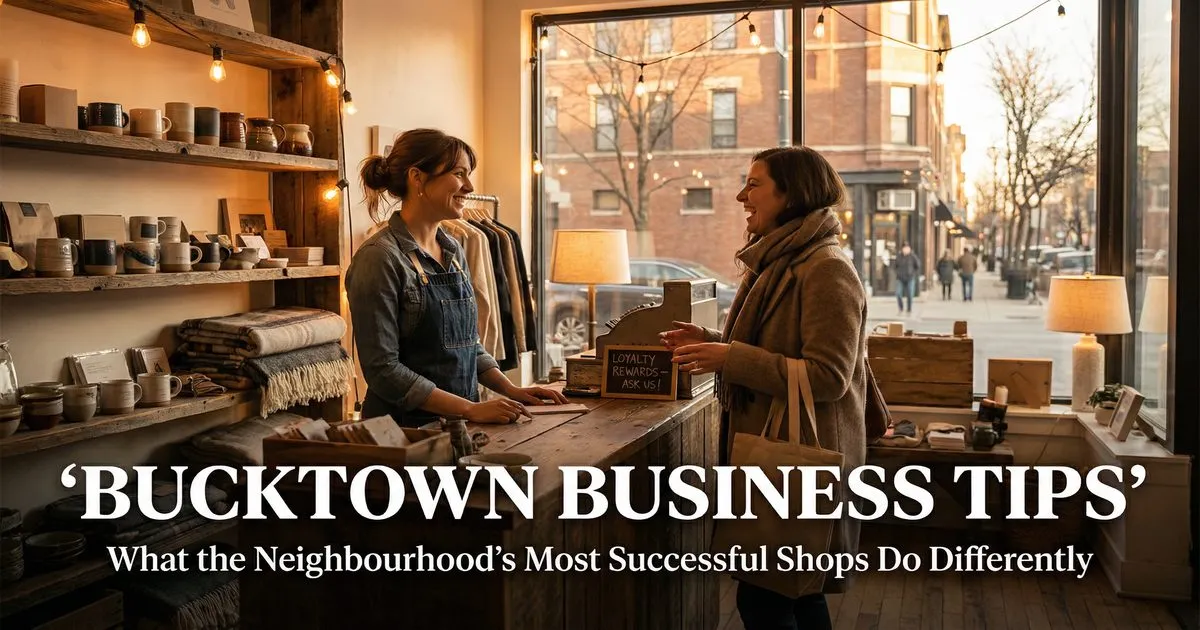
Business Tips: Bucktown Business Owners on Customer Retention: What the Neighbourhood's Most Successful Shops Do Differently
Walk down Damen Avenue on a Saturday afternoon, and the energy of Bucktown is unmistakable. This former working-class Polish enclave has evolved into one of Chicago’s most vibrant commercial districts, defined by its eclectic mix of independent boutiques, record stores, and acclaimed restaurants . With a median age of 33 and an average individual income exceeding $103,000, the neighbourhood attracts a demographic that values quality, curation, and local charm .
However, operating a small business in Bucktown in 2026 is not without its challenges. Commercial rents remain high, and the convenience of e-commerce is a constant threat. In this competitive landscape, the most successful Bucktown business owners know a fundamental truth: acquiring a new customer is expensive, but keeping one is where true profitability lies.
Industry data backs this up. Acquiring a new customer costs 5 to 25 times more than retaining an existing one, and increasing customer retention by just 5% can boost profits by 25% to 95% . For independent retailers, existing customers spend 67% more than new ones .
So, how do Bucktown’s most beloved shops turn casual foot traffic into fiercely loyal regulars? We looked at the strategies driving customer retention in the neighbourhood's most successful independent businesses.
1. Hyper-Localised, Context-Aware Loyalty
The days of the generic "buy ten, get one free" paper punch card are fading. In 2026, successful Bucktown businesses are leveraging digital loyalty programs that feel hyper-local and context-aware .
Rather than blanket discounts, these shops use location-based and time-sensitive offers that speak directly to the neighbourhood's rhythms. For example, a boutique near The 606 trail might send a push notification offering a "rainy day" discount to locals when the weather turns, or a coffee shop might offer a "flash happy hour" during the mid-afternoon slump .
This approach works because it feels less like corporate marketing and more like a neighbour doing you a favour. It roots the business in the specific where and when of Bucktown life, making the loyalty program feel relevant and human.
2. Emotional Connection Over Transactional Points
While points and discounts have their place, the most resilient Bucktown businesses understand that true loyalty is emotional, not just transactional. Customers don't return to independent shops simply to save a few dollars; they return because they feel recognized, appreciated, and part of a community .
Successful shop owners in the neighbourhood train their staff to focus on relationship-building. This means remembering names, recalling past purchases, and celebrating customer milestones. A vintage clothing store on Milwaukee Avenue might set aside a specific jacket they know a regular customer has been looking for. A local bookstore might send a genuine thank-you note after a customer's tenth visit.
In an increasingly automated world, this level of human connection is a massive competitive advantage. It turns everyday transactions into relationship-building moments that large national chains simply cannot replicate at scale .
3. Creating "Third Places" Through Events
Bucktown’s identity is deeply tied to its arts and culture roots, and successful businesses lean into this by transforming their retail spaces into community hubs, or "third places" (spaces outside of home and work where people gather).
Record stores like Torn Light Records or Graveface Records & Curiosities don't just sell vinyl; they host listening parties, intimate live performances, and community swaps . Boutiques host after-hours private shopping events for their most loyal customers, offering wine, personalized styling, and a VIP experience.
These events do more than drive immediate sales. They foster a sense of belonging. When a customer attends an event at a local shop, their relationship with the business shifts from consumer to community member. They are no longer just buying a product; they are participating in the neighbourhood's culture.
4. Seamless Omnichannel Experiences
While Bucktown shoppers love the tactile experience of browsing independent boutiques, they still expect the frictionless convenience of modern retail. The neighbourhood's top-performing shops have realized that "shopping local" shouldn't mean sacrificing technological convenience.
In 2026, strong omnichannel engagement is a major differentiator. Companies with robust omnichannel strategies retain 89% of their customers, compared to just 33% for those with weak implementations .
For a Bucktown boutique, this means ensuring that the in-store and online experiences are perfectly synced. A customer should be able to see a product on the shop's Instagram, check real-time inventory on their website, buy it online, and pick it up in-store on their walk home from the Damen Blue Line station. By removing friction from the buying process, independent shops ensure that their loyal customers never have a reason to default to a massive online retailer out of sheer convenience.
5. Rewarding Values-Based Actions
Bucktown residents are highly engaged with their community, and they prefer to support businesses that share their values. Forward-thinking shop owners are incorporating values-based actions into their retention strategies .
Instead of only rewarding financial transactions, these businesses reward behaviours that benefit the community or the environment. A local café might offer loyalty points for customers who bring their own reusable cups. A boutique might offer a discount to shoppers who donate to a neighbourhood fundraiser or participate in a local park clean-up.
By aligning their loyalty programs with the values of their customer base, Bucktown businesses deepen the emotional connection and reinforce their status as vital, responsible members of the community.
The Bottom Line
In a neighbourhood as dynamic as Bucktown, surviving the retail landscape requires more than just a great product. It requires a deliberate, strategic approach to keeping the customers who walk through the door.
By focusing on hyper-local relevance, emotional connection, community building, seamless technology, and shared values, Bucktown’s most successful independent shops aren't just retaining customers—they are cultivating advocates. And in 2026, that is the ultimate blueprint for small business success.
